
YOU’RE DOING IT WRONG! THIS IS HOW TO OUTLINE A SCREENPLAY.

It’s already been established that you don’t like to outline.
Too bad. You’re doing it. And here’s how.
You Need to Outline your screenplay
If you don’t remember why. No worries. Read this for a reminder on why you won’t make it in Hollywood unless you outline. Then come back… You better come back. Because regardless of how much this topic is debated on Twitter or X or whatever it’s being called these days, outlining is necessary and actually very helpful to your writing process.
Now that you’re convinced that you need to write an outline, there is an obvious next question: How do I write a script outline? So, let’s discuss why having an outline is important, formatting options, and ensuring your outline is in the best shape to be approved to script.
DON’T SKIP THIS STEP
There are many different ways to outline your screenplay, and ultimately, you’ll land on a process that feels right to you. But before you begin outlining your screenplay, you want to make sure your characters are 3-dimensional and their goals are clear. All scripts, whether ta feature or TV pilot, are about a character trying to reach a goal.
Here at The Professional Pen, we teach outlining as an essential step in your screenwriting process. Our Starter Kits take you through what we call the pre-work: the foundation you need before you ever write FADE IN. That way, when you get to the blank page, you’re not guessing. You’re confident in executing a plan.
The Pixar Formula
Break your story down to its emotional core. This formula helps you identify what your story is really about — the universal truth driving your character’s journey.Character Development
Define who your characters are, what they want, and why they want it. The stronger your characters, the stronger your story.Plot Development
Now that you know who’s driving the story, map out what stands in their way. Plot is simply character in motion — every obstacle should challenge who they are.Beat Sheets
Think of this as your story’s skeleton. Beat sheets outline every major moment in your script so you can see your structure before you write a single scene.Outlines
This is where your story comes to life in paragraph form. You’ll flesh out your beats, explore emotional turns, and make sure your story flows — just like pros do before they go to script.Script
The fun part — where the magic happens. But if you’ve done the work above, writing becomes a lot less painful and a lot more purposeful.
Ready to build a solid foundation before you outline?
TPP’s Starter Kits help you go deeper into who your characters are, what problems they’re trying to solve, and why those problems must be solved (better known as stakes). Without 3-dimensional characters and clear goals, outlining becomes an uphill battle. Flesh out these elements first so you have real direction when it’s time to outline your screenplay.
WRITE IT DOWN AND MAKE IT CLEAR
There are many different ways to format an outline for your screenplay, and ultimately you will settle on a process that feels right to you. Let’s examine a snapshot from TPP’s Sample Outline Template below.
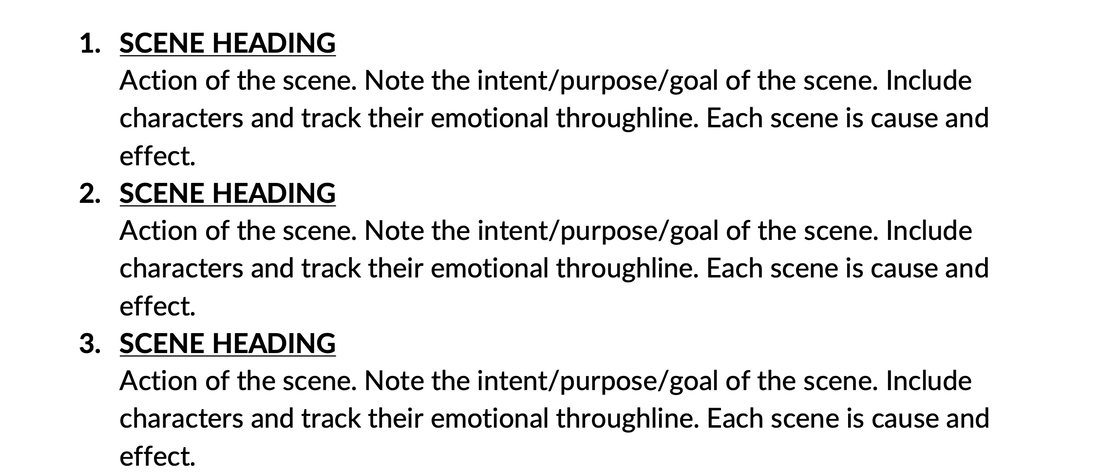
The Professional Pen’s Sample Outline Template for outlining screenplays.
This Is How the Pros Do It
Outlining isn’t just about organizing your thoughts — it’s about communicating your story clearly so producers and executives can follow the beats with context.
Start by listing the scene heading for each scene. Then, describe the action. Keep it short and focused, or go more detailed if you prefer — just make sure you include the goal of the scene. Ask yourself: How does this scene move the story forward?
Include your characters and track their emotional throughlines as the story progresses. Each scene should build on the one before it, creating momentum and clarity. Think cause and effect.
If your story has multiple threads, consider color-coding your scene headings to track different storylines. Ultimately, make the outlining process your own — but remember, the clearer your outline, the smoother your scriptwriting process will be.
Now, let’s look at this sample outline example in play by examining the DC pilot outline by John August.
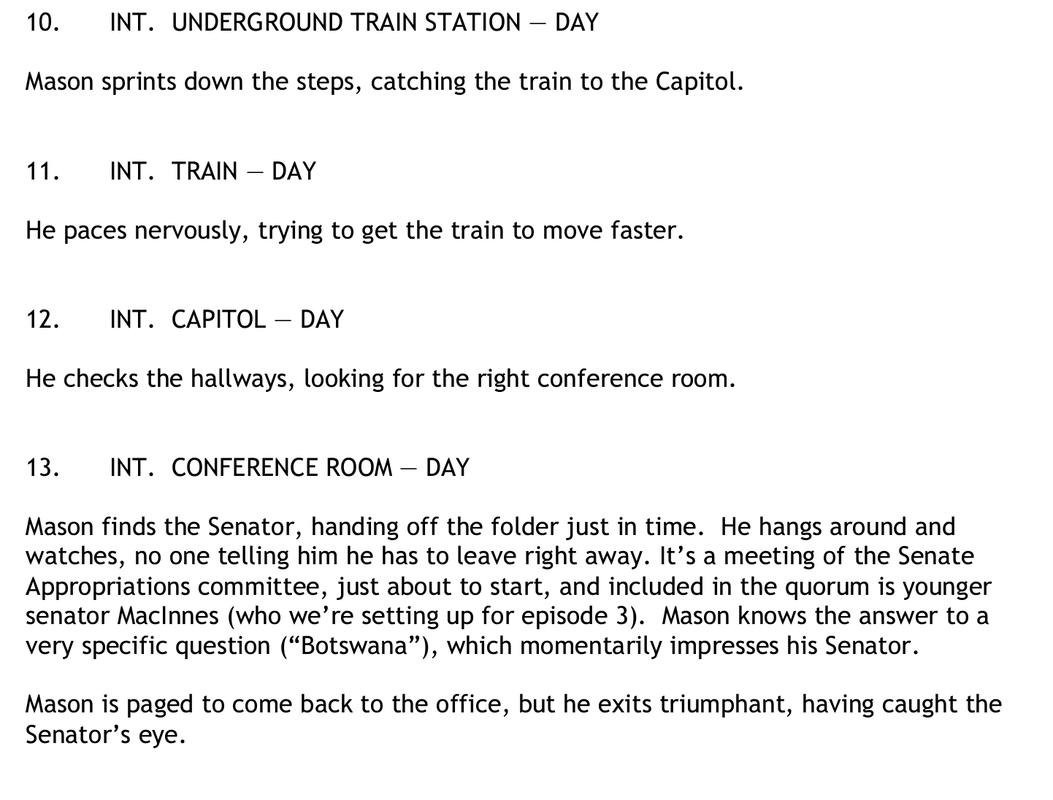
John August’s outline for a DC Comics TV pilot.
Notice how August describes the dialogue but does not get bogged down in specifics. Also, pay attention to how the scenes build upon each other, and how we are able to track Mason’s emotional throughline. Although his descriptions are brief, we are able to see the build-up of anticipation that Mason has to see the Senator. As each scene builds upon itself, we see a nervous Mason finally catch relief when he is successful in his tasks and catches the eye of the Senator.
Now that you’ve got the basics, it’s time to put them to work.
Practice makes professional. Once you’ve drafted your outline, submit it for an Outline Review with The Professional Pen.
We’ll be your studio execs — giving you notes, identifying what’s not clear or working, and helping you strengthen your structure before you ever write a page. When your outline’s ready, we’ll “approve you to script” just like in the real Hollywood process.
